
What Is a Miami-Dade Notice of Acceptance?
A Miami-Dade Notice of Acceptance (NOA) is a product-approval document showing that a specific building product or system has been reviewed and accepted for use under stated conditions. For impact windows and doors, it identifies the tested configuration, allowable design pressures, impact classification, installation requirements, approval dates, and expiration date.
By Dave Meadors
For Broward homeowners, the important word is specific. An NOA does not approve every product made by a manufacturer. It applies only to the series, sizes, glazing options, components, and installation methods described in that approval.
That distinction matters because Broward County is within Florida’s High-Velocity Hurricane Zone (HVHZ). A window can be marketed as “hurricane rated” or “impact resistant” and still be unsuitable for a particular opening if its approval does not cover the proposed configuration or the design pressure required at that location on the home.
What is the High-Velocity Hurricane Zone (HVHZ)?
The High-Velocity Hurricane Zone, or HVHZ, is the part of Florida that includes Miami-Dade and Broward counties. In the HVHZ, window and door products used on a permitted job need a current Miami-Dade Notice of Acceptance or a Florida Product Approval that specifically allows HVHZ use. Broward Impact sells and installs ES Windows and CWS products for HVHZ work, and it matches the approval to each opening before the permit is filed. Licensed CGC 1514968.
What Does an NOA Certify?
A Miami-Dade NOA documents Miami-Dade County Product Control’s acceptance of a particular product or system under the conditions stated in the approval. For impact windows and doors, the supporting documentation commonly addresses three critical areas.
Design pressure
Design pressure measures the wind force a building component is approved to resist. Window and door approvals generally provide positive and negative pressure ratings:
- Positive pressure represents wind pushing toward the building.
- Negative pressure represents wind pulling away from the building.
The required pressure is not necessarily the same for every opening. It can vary with the home’s height, dimensions, exposure, location, and the opening’s position on the building. Openings near corners can experience different pressures from openings located farther from an edge.
An NOA’s allowable-design-pressure tables show the limits of the tested system. The proposed unit must meet or exceed the pressure required for its specific opening.
Impact and cyclic testing
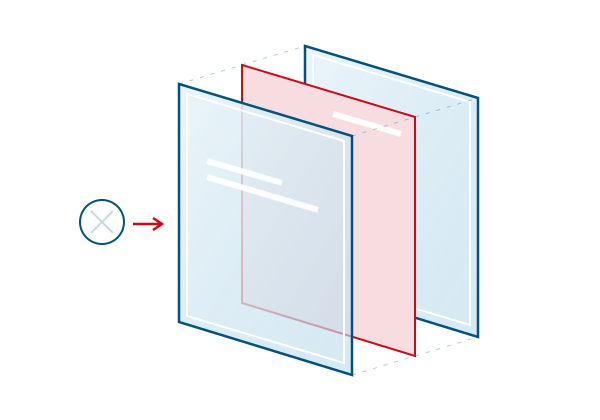
For an impact-resistant system, the approval identifies the applicable impact classification and tested assembly. HVHZ evaluations commonly reference:
- TAS 201 for impact testing
- TAS 202 for structural loading, air infiltration, and water resistance
- TAS 203 for cyclic wind-pressure loading
Impact testing evaluates the assembly’s response to specified missile impacts. Cyclic testing then subjects it to repeated pressure changes intended to represent hurricane wind loading. Passing these protocols does not mean a product is indestructible. It means the tested assembly met the applicable standard under controlled test conditions.
HVHZ compliance
An NOA should state whether the product complies with the Florida Building Code requirements applicable to the HVHZ. That is essential in Broward County.
The approval must also cover the exact way the product will be used. Size, glass type, frame, mullions, anchors, substrate, spacing, and installation details can all affect whether an assembly remains within its approved limitations.
What an NOA Covers — and What It Does Not
A typical window or door NOA may identify:
- The approval holder or manufacturer
- Product type, series, and model
- Frame and glazing configurations
- Impact classification
- Maximum approved dimensions
- Allowable positive and negative design pressures
- Mullion or reinforcement requirements
- Anchor types, spacing, and edge distances
- Approved substrates or wall conditions
- Installation drawings and limitations
- Approval and expiration dates
An NOA does not automatically establish that:
- Every product from that manufacturer is approved
- Every size or glass package is included
- The product is suitable for every opening on your home
- A different anchor pattern may be substituted
- The installation itself will be code-compliant
- The permit has been approved
- The product cannot be damaged during a hurricane
- The product qualifies you for a particular insurance credit
Wind-mitigation credits are set by the insurer after an OIR-B1-1802 inspection. Product approval is important documentation, but it does not guarantee a credit or determine its value.
Homeowners comparing product options can visit our Miami-Dade-approved impact windows page. This explainer focuses on reading and verifying the approval itself.
How to Look Up a Miami-Dade NOA
Use the official Miami-Dade Product Control Search, not a logo on a brochure or an unsupported statement from a salesperson.
If you have the NOA number, enter it in the file-number search. A typical number contains a date-based sequence followed by a decimal suffix, such as XX-XXXX.XX. If you do not have the number, use the advanced search to look for the manufacturer or product.
Once you find the record, open the approval and check the following.
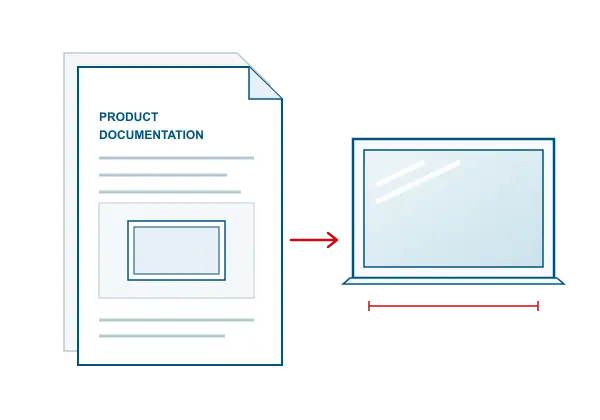
1. NOA number
The number on the permit documents, proposal, product schedule, and approval should agree. Watch for transposed digits or an older approval number copied from a previous project.
A revised product may have a newer NOA. Miami-Dade’s database may label an older file as superseded, expired, or closed, so read the status rather than assuming that any search result is current.
2. Expiration date and status
Confirm that the approval is active and has not expired. Miami-Dade describes an expired NOA as no longer active and a closed file as no longer valid. A search result alone is not proof of current acceptance.
The expiration date normally appears on the NOA’s first page and approval block. If a contractor provides an approval with a past expiration date, ask for the current document and verify it in the official database.
3. Manufacturer and product match
The manufacturer and exact product series must match what is being proposed. A valid approval for one window series cannot support a different series simply because both come from the same company.
Broward Impact Window & Door installs ES Windows and CWS systems approved for HVHZ use. The applicable approval still must be matched to the particular system, opening, size, glass package, pressure requirement, and installation condition.
4. Dimensions, glazing, and configuration
Review the product description and drawings for:
- Maximum frame width and height
- Single-unit or mulled configuration
- Operable or fixed configuration
- Glass type and thickness
- Impact classification
- Reinforcement requirements
- Any size-dependent pressure limitations
A product name that appears correct can still be mismatched if the proposed dimensions or glazing fall outside the accepted configuration.
5. Design-pressure tables
Find the allowable positive and negative pressures for the proposed size and configuration. Both values matter. They must be compared with the pressures assigned to the opening in the permit documents.
Broward County’s window and door permit instructions call for valid Florida or Miami-Dade approvals with the relevant opening sizes, glazing types, and corresponding pressures identified.
6. Installation details
Check the approved anchors, spacing, embedment, edge distances, substrate, buck requirements, and mullion details. The installation must follow the approval and the permitted plans. Changing one of these elements can place the installation outside the NOA’s limitations.
How to Spot an Expired or Mismatched Approval
Common warning signs include:
- The expiration date has passed.
- The database lists the file as expired or closed.
- The NOA number on the proposal differs from the submitted approval.
- The approval names a different manufacturer or series.
- The proposed unit exceeds the listed maximum dimensions.
- The glass package is not included in the approval.
- The design pressure is too low for the opening.
- The approval covers a non-impact configuration.
- The installation calls for different anchors or spacing.
- A brochure says “Miami-Dade approved,” but no approval number is provided.
Do not rely on the approval cover page alone. The limitations, pressure tables, and installation drawings are where many important conditions appear.
Miami-Dade NOA vs. Florida Product Approval
| Item | Miami-Dade NOA | Florida Product Approval |
|---|---|---|
| Issuing authority | Miami-Dade County Product Control | Florida Building Commission |
| Identification | NOA or file number | Florida approval number beginning with “FL” |
| Basic scope | Acceptance of a specified product or system under stated conditions | Statewide approval of a specified product or system under stated conditions |
| HVHZ use | Intended to document compliance with applicable HVHZ requirements when stated in the approval | Must specifically indicate that the product is approved for HVHZ use |
| What to verify | Status, expiration, series, dimensions, glazing, pressures, anchors, and limitations | Approval status, code version, HVHZ designation, product listing, evaluation documents, pressures, and limitations |
| Permit use in Broward | May support the permit when valid and applicable | May support the permit when valid, applicable, and approved for HVHZ use |
| Does it replace project review? | No | No |
A Florida Product Approval is not automatically interchangeable with an NOA in every configuration. Use the official Florida Product Approval search and confirm that the listing expressly permits HVHZ use.
With either approval path, the local permitting authority still evaluates whether the product is being used within the approval’s conditions.
Why NOAs Matter for Broward Permitting
Broward permit reviewers need to connect each proposed opening with a suitable approved product. The permit package may include an opening schedule, required design pressures, product approvals, glazing information, and relevant installation details.
A correct NOA helps document that the proposed system can satisfy the requirements assigned to that opening. An expired or mismatched approval can lead to plan-review comments, document revisions, ordering delays, or a product that cannot be installed as proposed.
This is why approval verification should happen before products are ordered — not after they arrive.
Frequently Asked Questions
Does every impact window in Broward need a Miami-Dade NOA?
A valid Florida Product Approval may also be accepted, but it must specifically allow HVHZ use and cover the proposed configuration. The permit authority determines whether the submitted documentation is acceptable.
Is the manufacturer’s name enough to verify approval?
No. Approval is tied to a particular series and configuration. Confirm the exact model, dimensions, glass, pressures, components, and installation details.
Does “impact resistant” mean the product is approved for the HVHZ?
Not automatically. Look for a current Miami-Dade NOA or a Florida Product Approval that expressly identifies HVHZ use.
Can one NOA cover every window in my home?
Sometimes one approval can cover several openings, but each unit must remain within its size, configuration, pressure, and installation limits. Different window types or conditions may require separate approvals.
Who should check the NOA before ordering?
The contractor should coordinate the product selection with the opening schedule and permit requirements. Homeowners can also verify the number and status through the official databases.
What counties are in Florida’s High-Velocity Hurricane Zone?
Miami-Dade County and Broward County are in the HVHZ. If your home is in Broward County, including Dania Beach and the other Broward cities Broward Impact serves, HVHZ product-approval rules apply to permitted window and door work.
Are impact windows required in Broward County?
For new construction and permitted window replacement in the HVHZ, the home needs hurricane-rated opening protection. That can be impact windows or approved hurricane shutters. Broward Impact manages permitting and code compliance for the installations it performs. The exact requirement for your house is set by the issuing building department and the scope of your permit.
Do both ES Windows and CWS qualify for HVHZ use?
Both can, when the specific product carries a current Miami-Dade NOA or Florida Product Approval for HVHZ use. Frame material alone does not decide compliance. Broward Impact features ES Windows (aluminum, including the Prestige, Elite, and Multimax lines) and CWS (vinyl), and it checks the approval for the exact product quoted for your home.
If my windows are HVHZ approved, do I automatically get an insurance discount?
No. Product approval is what the permit requires. A wind mitigation credit, if any, is set by your insurer after a wind mitigation inspection on form OIR-B1-1802. Homes with doors and windows designed to withstand wind pressure and projectiles may qualify for insurance savings. An NOA or Florida Product Approval does not, by itself, set that amount.
Don’t wait for the next hurricane to protect your home. The BEST time is now…
Get Your Free In-Home Estimate
"*" indicates required fields

Broward Impact Window & Door installs ES Windows and CWS systems approved for HVHZ use, with product documentation matched to the proposed openings and permit requirements.
Local since 2008. Over 20,000 projects completed. Licensed CGC 1514968.
Schedule a free in-home estimate with Broward Impact Window & Door in Dania Beach.
Broward Impact Window & Door · 1954 Tigertail Blvd, Dania Beach, FL 33004 · 954-922-0606 · Hours: Mon–Fri 8:30 AM–6:00 PM, Sat 10:00 AM–2:00 PM, Sun closed.