

Wind Mitigation Inspections in Florida: Form OIR-B1-1802 Explained
What is a wind mitigation inspection? It is a licensed inspection that documents a Florida home’s wind-resistant construction features on form OIR-B1-1802. The inspector records what can be verified; the homeowner submits the completed form and supporting documentation to the insurer, which decides what wind-mitigation credits apply and calculates the amount.
A wind mitigation inspection does not set your insurance bill. After the inspector completes form OIR-B1-1802, you submit the form and the supporting documents to your insurer, and the insurer decides whether a credit applies and what the amount is. Homes with doors and windows designed to withstand wind pressure and projectiles may qualify for insurance savings. Broward Impact installs the openings and provides the product-approval documents for the work it did. The inspection itself is arranged by the homeowner with a qualified inspector.
By Dave Meadors

What a wind mitigation inspection is—and is not
A wind mitigation inspection is not a general home inspection, a building-code inspection, or a guarantee that a home will withstand a hurricane. Its purpose is narrower: an authorized inspector documents specific construction features that may reduce windstorm loss, using Florida’s Uniform Mitigation Verification Inspection Form, OIR-B1-1802.
The inspector must support the answers with photographs or documents as the form requires. Permit records, product approvals, and installation documentation matter because an inspector cannot treat an unverified feature as verified simply because it looks similar.
The current adopted form is OIR-B1-1802 (Rev. 04/26), effective April 1, 2026 under Rule 69O-170.0155, Florida Administrative Code. It contains nine numbered questions. Older articles commonly describe the prior seven-question version, so homeowners should make sure an inspection is completed on the current form.
What the current OIR-B1-1802 form documents
The current form addresses these nine areas:
- Building code. The inspector records which Florida Building Code era applied when the original permit was filed. For homes in Miami-Dade or Broward—the High-Velocity Hurricane Zone—the form also includes the South Florida Building Code (SFBC-94) option.
- Region. The home is classified by location and design wind speed as HVHZ or Region 1, 2, or 3.
- Roof slope. The form distinguishes a principal roof slope of at least 6:12 from one below 6:12, using its stated rule for homes with multiple slopes.
- Roof covering. The inspector identifies each covering type—such as shingle, tile, metal, built-up, or membrane—and records permit, product-approval, and installation information. The form then classifies whether the covering documentation meets its criteria.
- Roof-deck attachment. The inspector reports the weakest attachment found. The choices address sheathing, fasteners, uplift resistance, reinforced-concrete decks, qualifying spray-foam applications, other conditions, and situations where the attachment is unknown or the attic is inaccessible.
- Roof-to-wall attachment. The weakest connection controls. The form distinguishes toenails, clips, single wraps, double wraps, structural connections, and other or unverified conditions. It also addresses connectors not installed as intended.
- Roof geometry. The roof is classified as hip, qualifying flat, or other. The form defines the measurements that decide the category; an everyday description of the roof shape is not enough.
- Sealed roof deck/secondary water resistance. The inspector records whether a qualifying supplemental water barrier is present, absent, or unknown. The new form lists several qualifying systems; ordinary underlayment or hot-mopped felt alone does not qualify.
- Opening protection. The inspector documents the weakest wind-borne-debris protection for glazed and non-glazed openings, including windows, entry doors, sliding-glass doors, skylights, and garage doors.
The current form does not contain standalone questions titled “gable-end bracing” or “wall construction.” Those descriptions appear in many general wind-mitigation checklists, but they should not be presented as numbered sections of the current OIR-B1-1802.
How opening protection is graded
Opening protection is where documentation and completeness become especially important. The inspector first classifies each type of glazed and non-glazed opening, then reports the weakest protection level.
For glazed openings, the form uses these levels:
- A: verified cyclic-pressure and large-missile protection using the form’s 9-pound standard for windows and doors and 4.5-pound standard for skylights.
- B: verified cyclic-pressure and large-missile protection using the form’s 4-to-8-pound range for windows and doors and 2-to-4.5-pound range for skylights.
- C: verified plywood or OSB protection meeting the cited Florida Building Code table.
- N: a system that appears to meet a verified category but lacks documentation, or another covering that cannot be identified as A, B, or C.
- X: no wind-borne-debris protection.
- Z: a damaged opening that needs repair or replacement.
Level D is used for verified non-glazed entry or garage doors that meet the form’s listed wind-pressure standards. The final answer combines the glazed-opening level with a subcategory—such as A.1, A.2, or A.3—based on the weakest non-glazed opening.
The key word is all. To receive an all-glazed-openings classification at a given level, every glazed opening must meet at least that level. One unprotected window, door, garage-door glazing panel, skylight, or glass-block opening can move the result to the weaker category. A collection of impact windows does not make the whole home fully protected if another required opening is unprotected or cannot be verified.
The 2026 form also says openings must be in good condition. It states that buildings with openings needing replacement do not qualify for wind-mitigation rate differentials, regardless of other features.
Where impact windows, doors, and NOAs fit
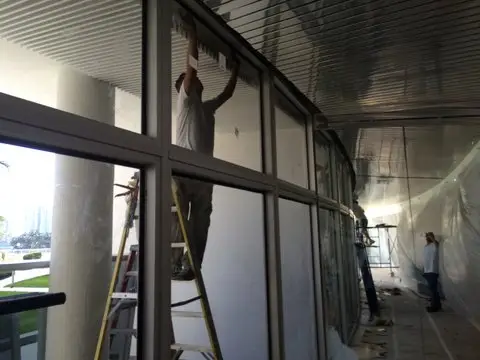
Impact products can support a verified opening-protection answer when the installed product and its documentation meet the form’s requirements. The form recognizes products listed as wind-borne-debris protection devices in the Florida or Miami-Dade product-approval systems and tied to specified test standards.
That is why the paperwork matters. The inspector must be able to connect the installed opening to valid approval information and the applicable protection level. A Miami-Dade Notice of Acceptance is evidence about an approved product and its conditions of use; it is not, by itself, proof that every opening in the home is protected or that the installation matches the approval. Learn how to read that documentation in our Florida product approvals and NOAs explainer.
How Florida wind-mitigation credits actually work
Florida Statute 627.0629 requires residential property-insurance rate filings to include actuarially reasonable discounts, credits, other rate differentials, or appropriate deductible reductions for qualifying wind-mitigation features. Florida Statute 627.711 establishes the uniform inspection form used to factor wind-insurance discounts.
The law does not create one universal savings figure. The inspector documents the home; the insurer applies its approved rating plan to the policy. The result can vary with the insurer, the home, the verified combination of features, and the policy. Some items listed on the form may not qualify for a credit. Anyone quoting a savings percentage without the completed form and the insurer’s calculation is guessing.
The current form may be valid for up to five years, provided no material change has been made to the structure and no inaccuracy is found on the form. “Up to” matters: a material change or incorrect information can require a new inspection before that period ends, and an insurer may independently verify a submitted form as allowed by law.
Who can perform the inspection, and what to expect
Under section 627.711 and the form, an authorized signer may be:
- a Florida-licensed home inspector who has completed the required hurricane-mitigation training and proficiency exam;
- a certified building-code inspector;
- a licensed general, building, or residential contractor;
- a licensed professional engineer;
- a licensed professional architect; or
- another individual or entity the insurer recognizes as qualified to complete the form.
Before scheduling, ask the insurer whether it has submission or inspector requirements. Gather permits, roof records, product approvals, NOAs, and installation documents. The inspector will need access to the home’s exterior and interior and, where applicable, accessible attic areas. The inspector documents the observable features, collects the required proof, signs the form, and has the homeowner attest that the inspection occurred. The homeowner then submits the form and attachments to the insurer.

After a Broward Impact installation
After Broward Impact installs impact windows or doors, the homeowner’s next insurance step is to arrange a wind mitigation inspection with a qualified inspector. Broward Impact supplies the product-approval documentation for the openings it installed so the inspector can evaluate those products against the form. The inspector completes OIR-B1-1802; the insurer determines whether a credit applies and sets the amount.
Frequently asked questions
What is form OIR-B1-1802?
It is Florida’s Uniform Mitigation Verification Inspection Form. An authorized inspector uses it to document specified wind-resistant features, and the homeowner submits it with supporting evidence to the property insurer for rating consideration.
How much will a wind mitigation inspection save me on insurance?
Only the insurer can calculate that from the completed form and its approved rating plan. The amount varies by insurer, home, verified features, and policy. Anyone quoting a percentage before that calculation is guessing.
Do impact windows alone qualify me for a credit?
They may support the opening-protection portion of the form, but no contractor or inspector can promise a credit. The form grades the weakest opening, requires documentation, and considers other glazed and non-glazed openings. The insurer decides whether a credit applies and its amount.
How long is a wind mitigation inspection good for?
The current form says it is valid for up to five years if there has been no material structural change and no inaccuracy is found. A change to the home or incorrect information can shorten that period.
Who can perform the inspection?
The form and section 627.711 list licensed home inspectors with the required mitigation training and exam, certified building-code inspectors, licensed general/building/residential contractors, professional engineers, professional architects, and others an insurer recognizes as qualified.
Do I need a new inspection after replacing my windows?
If you want the insurer to consider newly installed opening protection, arrange an updated inspection and submit a current form with the supporting product documentation. Replacing openings is a material change to what the prior form documented; confirm the insurer’s submission requirements.
Questions homeowners ask after they install impact windows
Does Broward Impact perform the wind mitigation inspection?
No. Broward Impact does not perform the insurance wind mitigation inspection. After a permitted installation, Broward Impact provides the product-approval documentation for the openings it installed. You schedule the inspection with a qualified inspector, then submit the completed OIR-B1-1802 form and attachments to your insurer.
When should I schedule the inspection after new impact windows or doors are installed?
Schedule it after the installation is complete and you have the product-approval documents for the new openings. Replacing windows or doors is a material change from what an older form documented, so an updated inspection is what the insurer can consider. Confirm your insurer’s submission requirements before you book.
How much does a wind mitigation inspection cost?
A wind mitigation inspection is separate from your Broward Impact installation and is paid to the inspector, not to Broward Impact. On Broward Impact’s insurance-discount page, the typical inspection cost is listed as $75 to $150, and the inspection is described as taking about an hour. The credit, if any, is set by your insurer after it reviews the form.
If I install impact windows, how much will my insurance go down?
No one can promise a set amount. Homes with doors and windows designed to withstand wind pressure and projectiles may qualify for insurance savings. The actual amount is set by your insurer from the completed OIR-B1-1802 form and that insurer’s approved rating plan. The form grades the weakest opening, so one unprotected or unverified window, door, skylight, or garage opening can change the result.
Is a wind mitigation inspection the same as my building permit inspection?
No. The building permit inspection checks that the installation was done as permitted. A wind mitigation inspection is a separate insurance inspection on form OIR-B1-1802. You need the permit inspection to close out the job. You need the wind mitigation inspection if you want your insurer to consider the new openings for a credit.
Is a wind mitigation inspection the same as a My Safe Florida Home inspection?
No. A wind mitigation inspection is an insurance form used to document features for a possible premium credit. My Safe Florida Home is a separate state grant program administered by the Florida Department of Financial Services. You may need both if you are pursuing a grant and an insurance credit, but one inspection does not automatically take the place of the other. Confirm the current program rules at mysafeflhome.com and with your insurer.
Don’t wait for the next hurricane to protect your home. The BEST time is now…
Get Your Free In-Home Estimate
"*" indicates required fields
Schedule a free in-home estimate with Broward Impact Window & Door.
Licensed CGC 1514968.
Broward Impact Window & Door · 1954 Tigertail Blvd, Dania Beach, FL 33004 · 954-922-0606 · Hours: Mon–Fri 8:30 AM–6:00 PM, Sat 10:00 AM–2:00 PM, Sun closed.