
Impact Window Glass Explained: Low-E, Tint & Turtle Glass
Low-E, tint, and turtle glass describe different ways an impact window controls sunlight, heat, and visible light. Low-E is a coating that manages solar heat, tint changes the amount and color of visible light passing through, and turtle glass is a compliant glass configuration for certain coastal properties. The right choice depends on the home, location, and exact approved window system.
By Dave Meadors
- 4.6 ★ Google249 reviews
- CGC 1514968Licensed contractor
- Since 2008Local to Broward
- 20,000+Installs in Broward County
- ES Windows & CWSBrands we install
What the Glass Specifications on an Impact Window Quote Actually Mean
Impact glass is not one universal product. Two windows can both meet the required structural and impact standards while using very different glass makeups. At the kitchen table, these are the six specifications worth understanding.
1. VLT: Visible Light Transmittance
VLT tells you how much visible light passes through the glass. It is shown as a decimal or percentage. A VLT of 0.40 means roughly 40% of visible light passes through the rated glass or window configuration.
Higher VLT generally means a brighter, clearer-looking window. Lower VLT means less visible light passes through, so the glass may look darker and less interior light may be visible from outside. That makes VLT important for appearance, daylight, glare, and turtle-sensitive coastal properties.
2. SHGC: Solar Heat Gain Coefficient
SHGC tells you how much solar heat gets through the complete window. The scale runs from 0 to 1, and lower numbers mean less solar heat is admitted. An SHGC of 0.25 means the rated window admits about one-quarter of the incident solar energy as heat.
In South Florida, this is the energy number homeowners should watch closely. Large west- and south-facing openings receive intense sun. Lowering SHGC reduces the solar heat entering the conditioned space. That is the physics; it is not a promise about a particular electric bill.
3. U-Factor
U-Factor measures heat transfer through the complete window or door assembly. Lower is better from an insulation standpoint. Unlike SHGC, which focuses on heat from sunlight, U-Factor measures how readily heat moves through the product.
On an NFRC label, U-Factor is a whole-product rating. The frame, spacer, glass construction, and overall assembly all affect the number. That is why the label for the exact window matters more than a general phrase such as “energy-efficient glass.”
4. UV Blockage
Laminated impact glass contains an interlayer between pieces of glass. Besides helping the glass remain together after impact, common architectural PVB interlayers screen a very high percentage of ultraviolet radiation. Low-E coatings can add further spectral control.
Reducing UV transmission helps slow fading of flooring, furniture, fabrics, and artwork. It does not make fading impossible: visible light, heat, material quality, and exposure time also matter. Ask for the published performance of the exact glass makeup if UV protection is a priority.
5. Tint
Tint is color in the glass—commonly gray or bronze—that reduces visible-light transmission and can reduce solar heat gain. Think of it as one of two main levers for solar-control glass. Low-E is one lever; tint is the other.
Tint usually creates a more noticeable visual change than a neutral Low-E coating. Gray tends to read more neutral, while bronze looks warmer. Either can reduce glare and VLT. For turtle-sensitive properties, tint can help bring an approved configuration below the applicable visible-light threshold.
6. The Glass Build
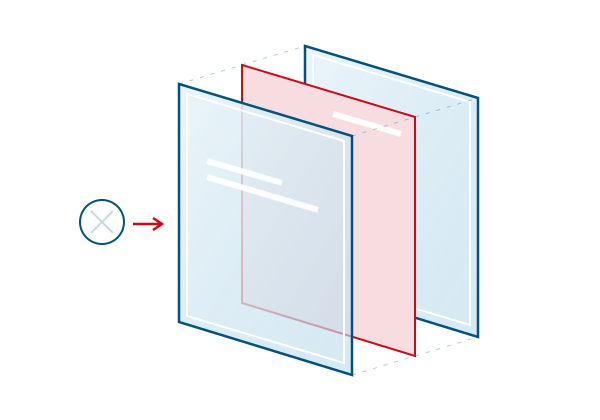
“Impact glass” may mean a laminated unit with two pieces of glass bonded around an interlayer. That interlayer may be PVB or a structural ionoplast such as SGP. The laminated component may also be part of an insulated glass unit with another lite of glass and a sealed space.
A quote may therefore include laminated or insulated laminated glass; clear, gray, or bronze glass; a Low-E coating; different interlayers; or a combination. Those choices affect VLT, SHGC, U-Factor, appearance, and sometimes available sizes.
They must also remain within the approved configuration for the exact window or door system being installed. A glass option is part of a product’s approval only when that makeup is permitted within the product’s approved configuration. See our product approvals and NOA explainer for how approved configurations work.
Clear, Tinted, and Low-E Impact Glass Compared
How much light gets through
These published examples show how much visible-light transmission can change with the glass makeup. They do not replace the NFRC rating and manufacturer documentation for the exact ES Windows or CWS unit on a homeowner’s quote.
| Glass option | Typical VLT | Typical SHGC | UV blockage | Turtle-glass compliant? |
|---|---|---|---|---|
| Clear impact glass | 86%–88% in published clear laminated ES/Tecnoglass examples | Varies by exact product | High with common PVB laminated makeups | Generally no at these VLT levels |
| Tinted impact glass | 22%–40% gray/gray; 31%–37% bronze/bronze in published examples | Varies by tint and product | High; exact value depends on the interlayer and makeup | Potentially, when the exact configuration and local rule align |
| Low-E impact glass | About 34%–74% in published ES/Tecnoglass examples | Varies by coating and product | High; the coating and interlayer both affect performance | Sometimes; Low-E alone does not mean compliant |
| Low-E + tint | About 30%–50% in published examples | Varies by coating, tint, and product | High; exact makeup controls performance | Often available in compliant configurations; verify the exact VLT |
Source note: VLT examples are from the ES Windows/Tecnoglass turtle-code glass guide. The exact NFRC values and approval documents for the quoted ES Windows or CWS product control.
The useful takeaway is simple: “Low-E” does not automatically mean “turtle glass,” and “tinted” does not automatically mean compliant. The tested VLT and the exact approved glass makeup are what matter.
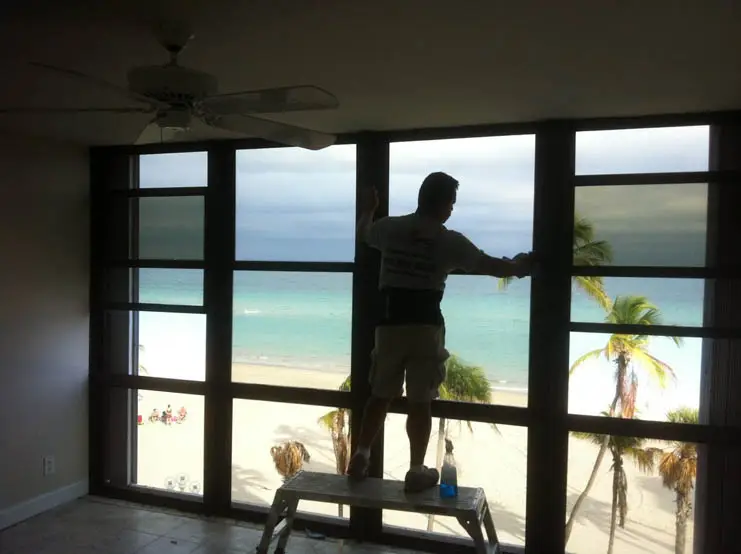
Clear impact glass
86%–88% in published clear laminated ES/Tecnoglass examples
Generally no at these VLT levels
Tinted impact glass
22%–40% gray/gray
Potentially, when the exact configuration and local rule align
Tinted impact glass
31%–37% bronze/bronze
Potentially, when the exact configuration and local rule align
Low-E impact glass
About 34%–74% in published ES/Tecnoglass examples
Sometimes; Low-E alone does not mean compliant
Illustration — light levels simulated from published VLT ranges; not a color sample.
What Is Turtle Glass?
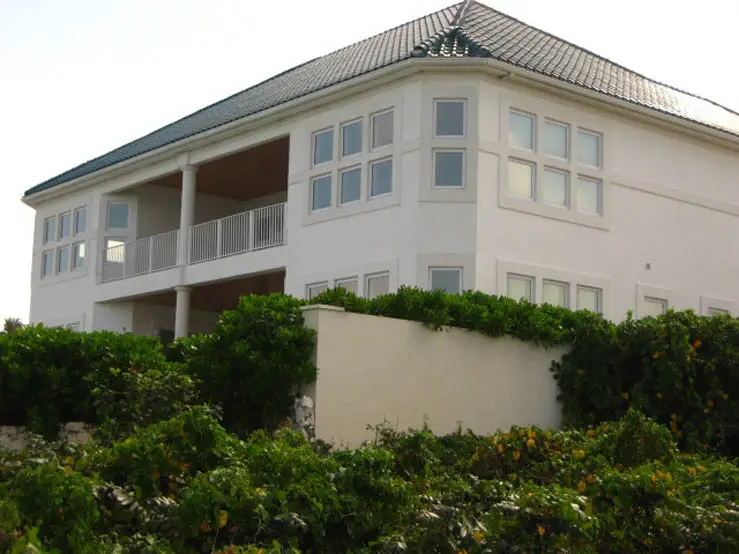
“Turtle glass” is not a different kind of impact-resistant glass. It is a glass configuration selected to limit artificial light visible from a sea-turtle nesting beach.
Hatchlings use natural light cues to orient toward the ocean. Artificial light from homes, condominiums, and other beachfront buildings can interfere with that process. Current guidance commonly references tinted glass at or below 45% inside-to-outside visible-light transmittance for windows, doors, and railings visible from the beach. The property’s city or county ordinance—and the permit reviewer’s interpretation—controls the actual requirement.
In Broward County, sea-turtle nesting season runs March 1 through October 31. Coastal municipalities have their own beachfront-lighting ordinances, so a homeowner should not order glass simply because someone calls it “turtle glass.”
The correct process is to
- determine whether the opening is subject to a local beachfront-lighting rule
- identify the jurisdiction’s requirement
- find an approved glass configuration for the window or door
- confirm that the manufacturer documentation for that exact configuration satisfies the permit requirement
Broward Impact installs ES Windows and CWS systems. Both product families have Low-E coatings and tint options capable of meeting turtle-glass requirements. The exact configuration still has to be checked against the product approval and the municipality’s requirements before it is ordered.
Low-E Glass and Florida Energy Performance
Low-E means low emissivity. A microscopically thin coating on a glass surface controls the movement of infrared energy while allowing useful visible light through. That is why Low-E glass does not necessarily look dark. A solar-control Low-E coating can lower SHGC without creating the same appearance as dark gray or bronze tint.
Florida’s energy requirements depend on the code edition, project type, compliance path, and exceptions. For a homeowner, the practical step is to read the NFRC label for the exact unit:
- U-Factor: lower means less heat transfer through the assembly.
- SHGC: lower means less solar heat enters through the window.
- Visible Transmittance: higher means more daylight passes through.
Do not compare two windows based only on the phrase “Low-E.” Compare the actual numbers, glass appearance, approved configuration, and the needs of each elevation of the home.
Frequently Asked Questions
What is turtle glass?
It is a glass configuration that limits visible artificial light reaching a nesting beach. A commonly referenced threshold is 45% or less inside-to-outside visible-light transmittance, but the property’s applicable local ordinance controls.
Do I need turtle glass if I do not live directly on the beach?
Usually the question is whether light from the property is visible from or affects a nesting beach—not simply whether the mailing address says oceanfront. Coastal homeowners should verify the applicable municipal rule before ordering glass.
Does Low-E make glass look dark?
Not necessarily. Low-E is a coating, not simply dark tint. Some coatings maintain relatively high visible-light transmission while reducing solar heat gain. Appearance depends on the coating, tint, laminate, and complete unit.
Does tint or Low-E change the impact rating?
A coating or tint does not independently create an impact rating. The complete window or door—including the frame, glass, interlayer, hardware, anchoring, and size—must match an approved configuration.
What is the difference between Low-E and tint?
Low-E is a thin coating designed to manage infrared energy and solar heat. Tint is color within the glass that lowers visible-light transmission and changes appearance. They can be used separately or together.
How do I know what glass is in my quote?
Ask for the glass description, tint, coating, laminated or insulated build, VLT, SHGC, U-Factor, NFRC information, and the approval documentation for the exact system. A good quote should identify more than the words “impact” and “Low-E.”